
Made to outlast
Eight designs from 1925 to 1977 that are still made today, and one new desk already behaving like a classic. A short history of buying things once.
Most of what we buy for the home is designed to be replaced. A sofa lasts until the next move, a lamp until the next trend, a desk until the flat-pack joints give up. And yet a small number of objects behave differently. They were drawn decades ago, sometimes a century ago, and they are still being made, still being bought and still looking like the most current thing in the room. This is a short history of eight of them, from 1925 to 1977, and one from this century that is already behaving the same way.
None of them are rare. You can buy every piece here new, today. That is rather the point.
1925: the chair that started with a bicycle
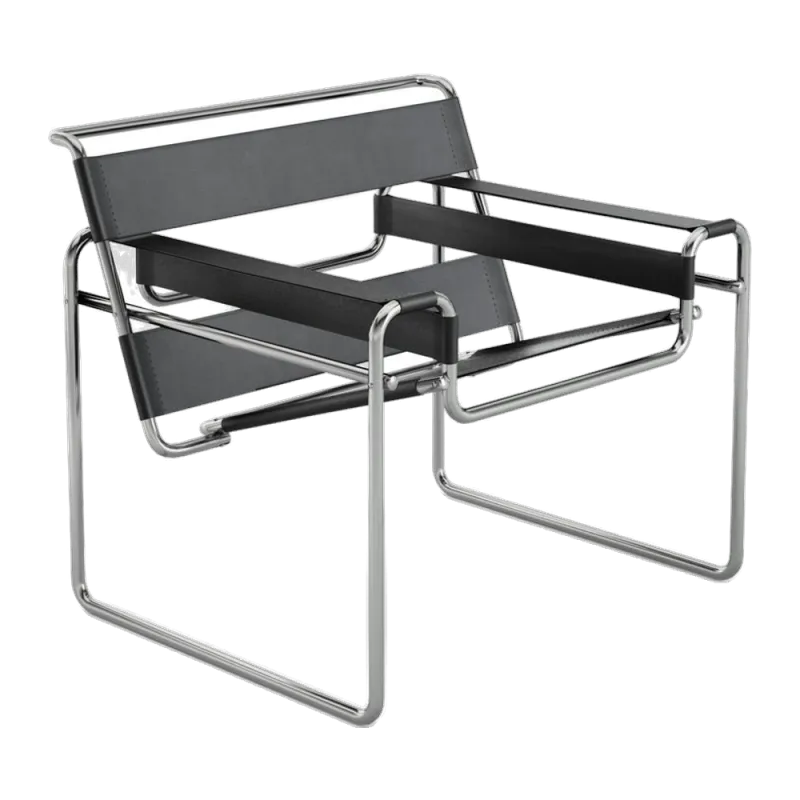
Marcel Breuer was still an apprentice at the Bauhaus when he looked at the frame of a bicycle and asked whether a club chair could be built the same way. The answer was a frame of bent tubular steel with leather straps stretched across it for the seat, the back and the arms. Everything that a traditional armchair hides under stuffing and upholstery is simply left out. The name came later, after Wassily Kandinsky, Breuer’s colleague at the school.
A hundred years on, the chair still looks like a diagram of itself. Knoll holds the production rights and stamps every frame with Breuer’s signature, which tells you something: a design this reduced has nowhere left to go, so it never had to change.
- 01
Wassily Chair
The club chair with the padding taken away. Tubular steel and belting leather, in production for a century and still the most modern chair in most rooms.
A design this reduced has nowhere left to go, so it never had to change.
1949 to 1962: wood, made to be used
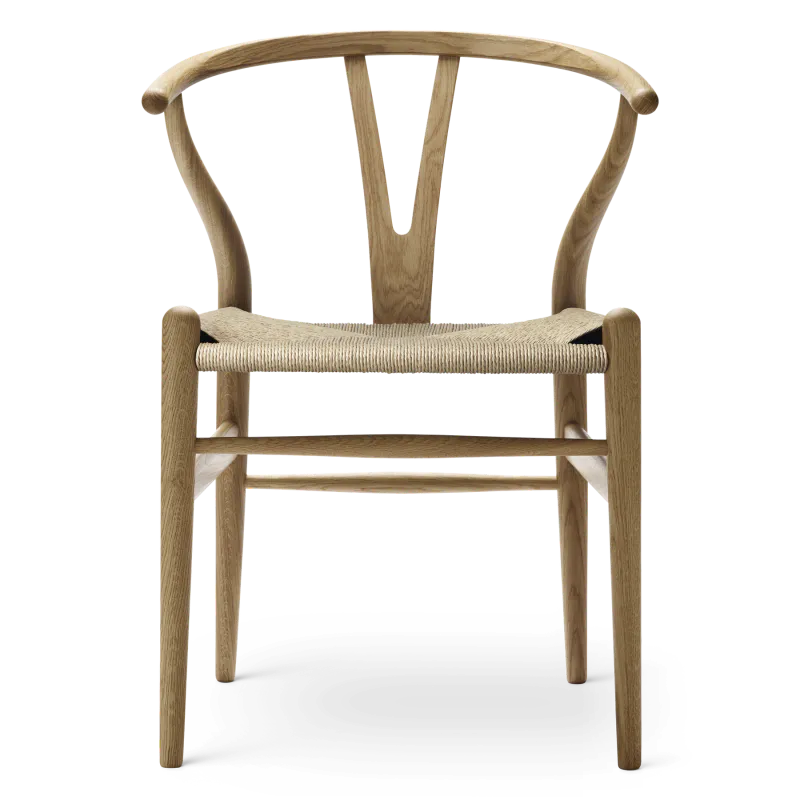
After the war, the language softened. Hans J. Wegner designed the CH24 in 1949 as his first chair for Carl Hansen & Søn, and it has been made without interruption since 1950. Its back and armrests are a single piece of steam-bent wood, held up by the Y-shaped splat that gives it its nickname, the Wishbone. The seat is woven by hand from paper cord. It is a dining chair, not a sculpture, and it has survived for seventy-five years precisely because it never forgets that.
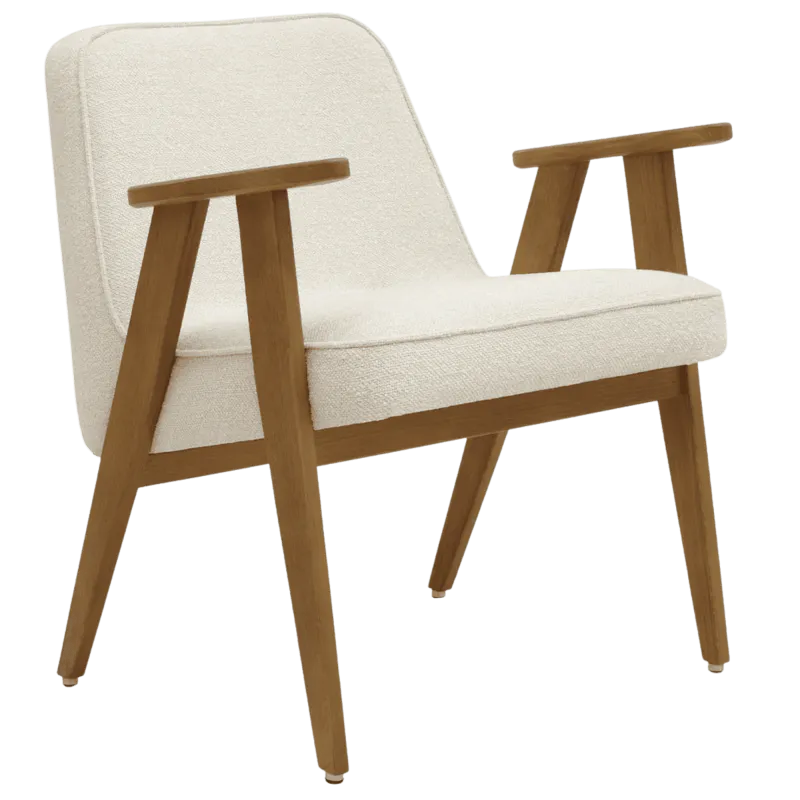
In Poland, Józef Chierowski was solving a different problem. His 366 Armchair, designed in 1962, was compact, cheap to make and produced in enormous numbers, which is how it ended up in so many Polish flats. Now reissued under an exclusive family licence, in solid oak and cream bouclé, it is proof that a mass-produced object can carry real character, as long as the proportions are right.
- 01
CH24 Wishbone Chair
Wegner’s first chair for Carl Hansen & Søn. One steam-bent piece for the back and arms, a paper-cord seat, and no break in production since 1950.
- 02
366 Armchair
The Polish classic that furnished a generation of flats, back in oak and bouclé under the designer’s family licence. Small, sturdy and quietly charming.
The 1960s: systems and light
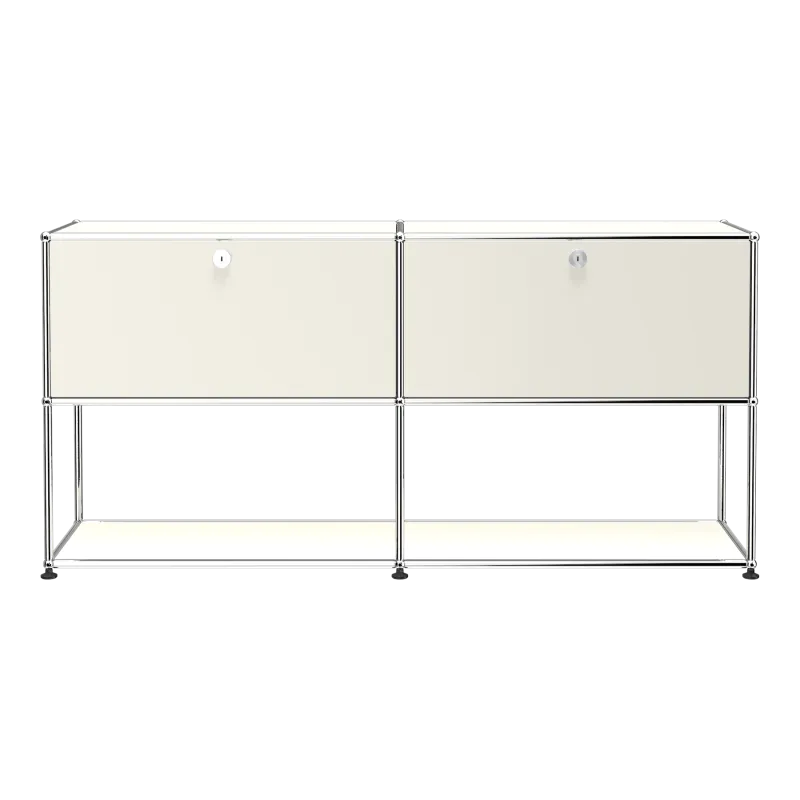
By the 1960s, designers were thinking less about single objects and more about systems. Fritz Haller and Paul Schärer developed USM Haller to furnish USM’s own offices in Münsingen: chrome-plated steel tubes, ball connectors and powder-coated steel panels that could be assembled into almost anything. The credenza on sale today uses the same original parts. It can be taken apart, extended and rebuilt as your rooms change, which is a better definition of sustainability than most materials labels.
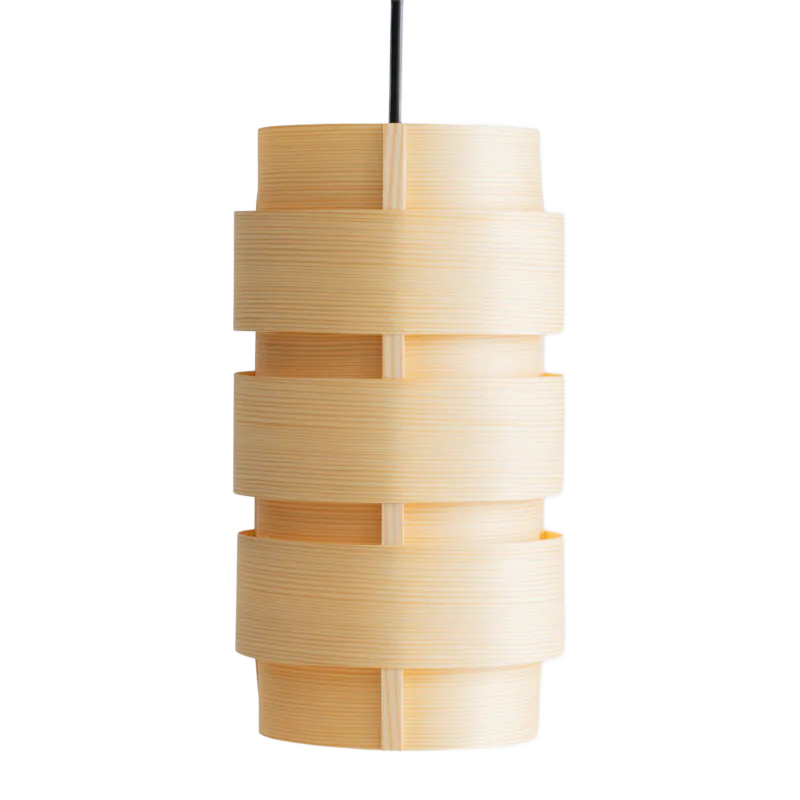
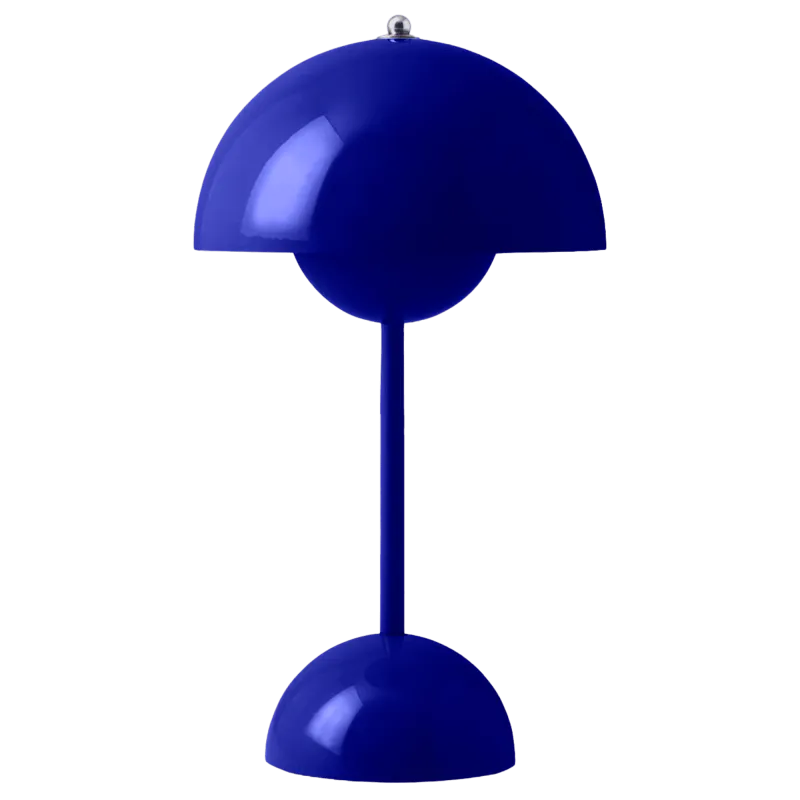
Light got the same treatment. In Sweden, Hans-Agne Jakobsson made lamps from thin bands of pine veneer held by sections of solid wood, so that the shade glows rather than shines. Vaarnii’s 1006 Hans Pendant is a reworked version of one of those 1960s designs, made from Finnish pine and just 14 cm across. Then, in 1968, Verner Panton went the other way entirely. His Flowerpot is two simple hemispheres and a saturated colour, as optimistic as the year it was made. In cobalt blue it still feels playful rather than nostalgic.
- 01
USM Haller Credenza F2
A system rather than a piece of furniture. The same tubes and ball connectors since the 1960s, so it can grow, shrink and move house with you.
- 02
1006 Hans Pendant 14
Pine veneer that turns a bulb into a warm glow. Small enough for a hallway, good in a row over a long table.
- 03
Flowerpot VP3 Table Lamp
Panton’s 1968 lamp in cobalt blue. Two hemispheres, one colour and an energy that has not dimmed in more than half a century.
1977: lightness as engineering
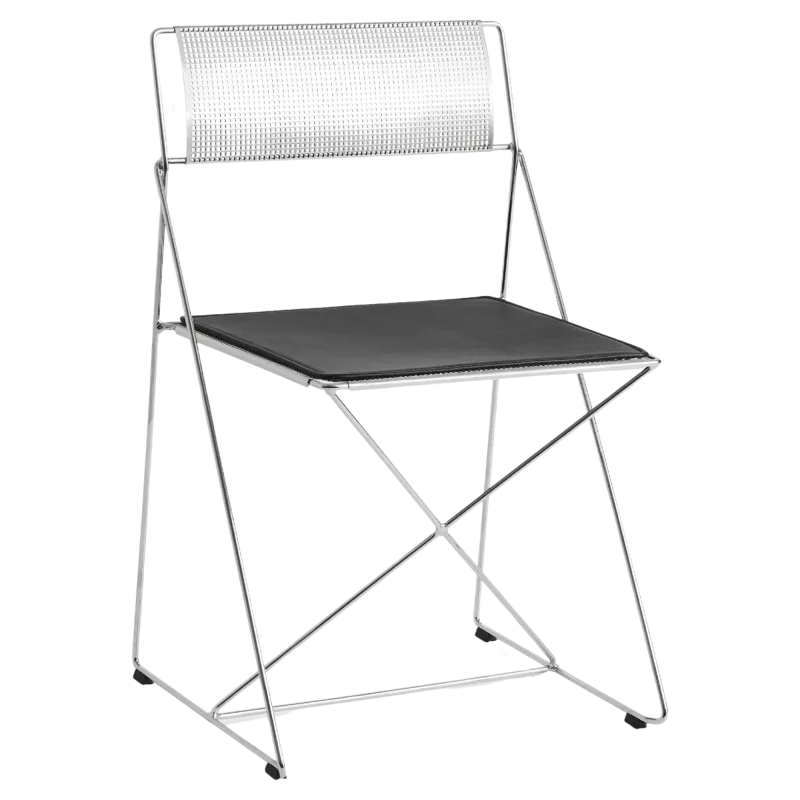
Niels Jørgen Haugesen’s X-Line Chair came out of the high-tech moment of the late 1970s, when designers began to show the structure rather than hide it. A steel-wire X under the seat gives the chair its strength, its flex and its visual lightness all at once. HAY has reissued it in chromed steel, and next to the Wassily it makes an interesting pair: fifty years apart, two answers to the same question of how little a chair really needs.
- 01
X-Line Chair Chrome
A steel-wire X that does the structural work and becomes the decoration. Light, chromed and a sharp counterpoint to warmer wood.
Now: a classic in waiting
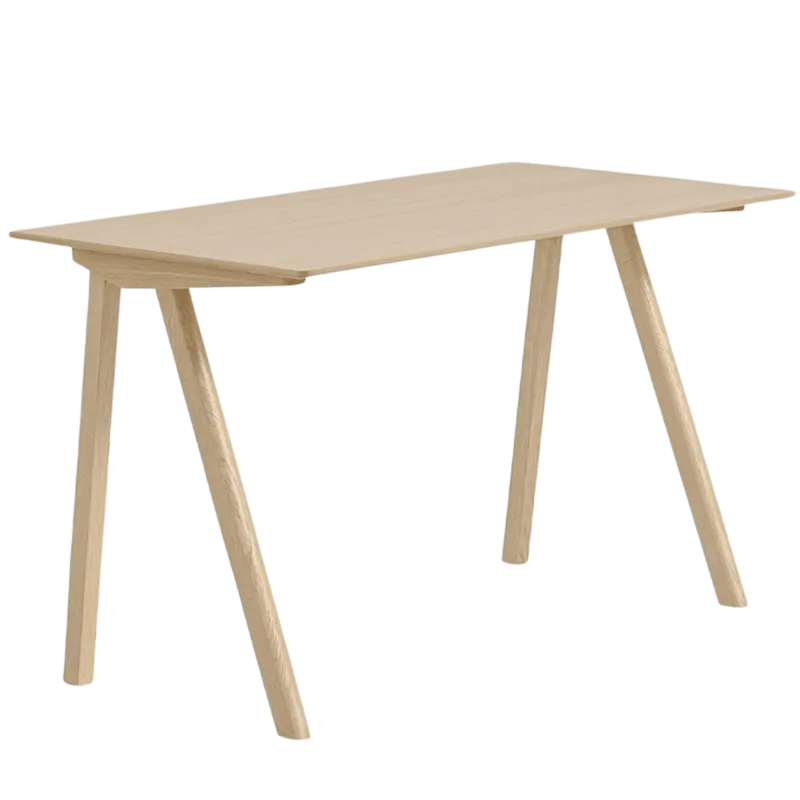
It is impossible to know which new designs will last, but some show the signs. The Bouroullec brothers’ CPH 90 desk was developed for the University of Copenhagen, which is to say it was designed for heavy, anonymous, daily use. Asymmetrical lacquered-oak legs, a slim oak-veneer top and a compact 130 × 65 cm footprint. It does nothing loudly. In fifty years, that may turn out to be the reason it is still made.
- 01
CPH 90 Desk
Designed for a university, scaled for a flat. A desk with nothing to prove, which is usually how classics begin.
What they have in common
Put these pieces side by side and a pattern appears. Each one was designed to solve a practical problem: a lighter chair, a cheaper armchair, an office that could be rearranged, a lamp that did not glare. None of them was designed to be fashionable, which is exactly why none of them has gone out of fashion. They are made of materials that age well, steel, solid wood, paper cord and leather, and several are built from parts that can be maintained, reconfigured or rebuilt rather than thrown away.
That is the useful lesson for anyone furnishing a home. Before buying something new, it is worth asking a simple question: would this still make sense if it had been designed fifty years ago? If the answer is yes, it will probably still make sense fifty years from now.